Wednesday, January 30, 2008

Sports Theme, Day 1

First, a little about us. We are 4 SAHM moms, we each take turns teaching in our homes. We teach 4 boys. We teach two weeks at a time, two days a week, for two hours each time. We met together and planned the themes that each of us wanted to teach. Then we assigned letters, numbers & shapes for each segment. There really is no rhyme or reason to my lessons. I try to follow the schedule that us four moms agree upon, but as for the actual material, I like to try new things each time. I get my ideas from the internet.

For music time, I put together a preschool CD that is divided into four parts. Each part lasts about 15 minutes. I use the same CD each time I teach. The kids love it, and since we only meet every six weeks, they don't get tired of doing the same thing over and over. I like it because I know that I have 15 minutes of each day already planned! They especially love "Goin' on a Bear Hunt" by Greg & Steve Kids in Action. We get out our pretend backpacks and put our pretend snacks inside (and don't forget the camera!), then we sling our pretend backbacks on and we're on our way. When using instruments, I try to have them follow the beat.

Theme: Sports

Letters: Mm & Qq

Numbers: 13, 14

Shape: Pentagon

Day 1

9:30-9:45 Circle Time

9:45-10:05 Letter Stations – Letter Mm (5 minutes each)
Sing the alphabet song. Introduce the letter of the week, Mm. Discuss what the lowercase and uppercase letter looks like, sound like and words that start with it. Do action words that start with the letter Mm- (pretend you’re using a) Mop, (act like a) monkey, (drink a glass of) milk, (putting on a pair of) mittens. (Thanks Cristi for the idea!)


Break into stations:

  • Computer station: starfall.com “Letter M” only
  • Worksheet station: Matching “M” words
  • Chalkboard station: Tracing the letter Mm (you write Mm on the chalkboard and then have each child trace over the letter with chalk)

10:05-10:10 Lesson – Body Movement
Ask the children what sports they like to play or watch. Have them pretend they’re playing soccer, baseball, basketball, swimming, fishing, hiking, football, etc.
Talk about soccer
What are some of the rules? (No hands except for the goalie, you can use your feet or head)
What do you wear? (Jersey, shorts, cleats, long socks, shin guards) Show pictures from the picture book, Morgan Plays Soccer.

10:10-10:20 Reading
Morgan Plays Soccer by Anne Rockwell

10:20-10:35 Snack

10:35-10:45 Play Time
Soccer in the hall

10:45-11:00 Music
Goin’ on a Bear Hunt by Greg & Steve Kids in Action (action song)
Shoo Fly by Susan Salidor Come and Make a Circle (use instruments)
Jungle Gym by Jack Johnson Sing-a-longs & Lullabies for the Film Curious George (use instruments, or creative dance using colorful scarves)
Tap your Toe and Follow Me by Susan Salidor (Action song)
The Wheels on the Bus by 101 Toddler Favorites (action song)

11:00-11:10 Math- Number 13
Have each child share their “13” of something (they had a homework assignment to find "13" of something and bring it to preschool)-practice counting

11:10-11:25 Art Activity

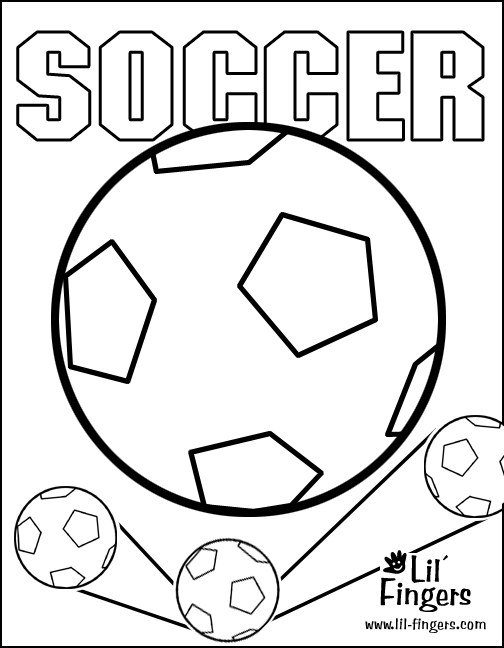
Print this soccer ball onto cardstock: http://www.lil-fingers.com/coloring/images/soccer.gif. Point out the pentagon shape on the soccer ball, have then squeeze glue onto the pentagons only. Then have them sprinkle glitter on the glue.

11:25-11:30 Closing
Read books on their own

Sports Theme, Day 2

9:30-9:45 Circle Time

9:45-10:05 Sequencing Lesson – Making baseball cookies
This was copied from Cristi's Sequencing/Patterns lesson

Ask the children if they have ever made cookies. What do you do first, next, etc. Show the four photos (from DLTK's website) and have them help you put them in order.

Have them sit around the kitchen table and have them help you roll out the cookie dough (made the night before) and make cutouts. While the cookies are baking, make the frosting, have them help you count out the measurements, and have them take turns using the mixer.

10:05-10:20 Reading
Talk about baseball
What are some of the rules? (3 strikes your out, running the bases, you’re out when your tagged, etc. )
What do you wear? (uniform, cleats, long socks, baseball mitt, helmet) Show pictures from a picture book)
What parts of your body do you use? Pretend you’re swinging a bat, throwing/catching the ball

Read My Lucky Hat by Kevin O’Malley

10:20-10:40 Snack Time
Decorate baseball cookies & eat them

10:40-10:50 Play Time
T-ball in the hall

10:50-11:05 Music
Two Little Blackbirds by Susan Salidor Come and Make a Circle (fingerplay -I glued a blackbird onto 10 popsicle sticks to do this fingerplay)
Bop 'Til You Drop by Greg & Steve Kids in Action (action song)
This Land is Your Land by Kid's Dance Express Songs of the USA (use instruments)
Ring Around the Rosies by 101 Toddler Favorites (action song)
ABC song by 101 Toddler Favorites (creative dance using colorful scarves)

11:05-11:15 Review
Play fishing game and review Pentagon, Mm, 13.

I use the fishing game at least once each segment. To make the fishing pole, I tied & glued yarn to a wooden dowel with a magnet glued and tied to the other end of the yarn. To make the fish, I printed fish onto cardstock, colored them, and then had them laminated. Put a paper clip on each fish. Now you can write with a dry erase marker on the back of each fish whatever you want. The possibilities are endless.

I wrote Mm, 13, and drew a pentagon shape on the back of the fish. Each child took turns catching the fish, told me what was on the back of the fish. I asked them what does the letter Mm sound like? Can you count to 13? How many sides are on a pentagon?

11:15-11:30 Memory Game
Sports Theme (we didn't get to this, so you will see it again on Day 3)

Tuesday, January 29, 2008

Pocket Chart

Here is a photo of the pocket chart I made using foam board and sheet protectors. The words and pictures can be tucked into the pockets and changed easily. It works for now, but isn't the sturdiest (I'd recommend buying one if you'll be using it a lot).

Simple Machines, Day 1: Inclined Plane (Ramp), Wedge, Screw, & Wheel & Axle

My son loves machines and after I noticed him experimenting with pulleys (a string tied to a cookie cutter draped over his finger), I decided to do a preschool lesson on simple machines. Since this is something that is often introduced in 3rd grade, I scoured the internet to find some simpler, not so technical stuff that would be appropriate to include in a lesson for 3-4 year olds. Anyway, you can go into as little or much detail about them as you want, but they just enjoyed playing with the machines more than anything else!

Quick intro to simple machines- There are 6 simple machines. They are the simplest machines that make up all machines (Ie: a can opener is made up of a lever, wedge, and wheel & axle). I've listed a brief definition and examples of each type of simple machine below. I did the first four on day one (lesson below), and the last two will be in the next lesson.

The Inclined Plane: Often referred to as a 'ramp' the inclined plane allows you to multiply your force over a longer distance. In other words, you exert less force but for a longer distance. You do the same amount of work, it just seems easier because you spread it over time. Inclined plane (ramp)--ladder, escalator, hill, roller coaster, stairs, wheelchair ramp, gangplank, dump truck, unloading ramp, parkade, Staircase, Ramp, Bottom of a Bath Tub, ramp-race track.

The Wedge: A wedge works in a similar way to the inclined plane, only it is forced into an object to prevent it from moving or to split it into pieces. A knife is a common use of the wedge. Wedge- -paper cutter, scissors, crowbar, chisel, axe, prying tools, can opener, door wedge, pins, needles, nails, zipper, knife.

The Wheel and Axle: Any large disk (the wheel) attached to a small diameter shaft or rod (the axle) can give you mechanical advantage. Turning a screw with a screwdriver is a simple example of a wheel and axle. Can you think of others we use everyday? Wheel and axle--windmill, bicycle, roller skate, vehicles, rolling pin, egg beater, helicopter, old-fashioned telephone dial, fishing reel, record player, tapes, door knob, pencil sharpener, bobbins, fans, casters, Wagon, Toy Car

The Screw: The screw is really just an inclined plane wrapped around a rod. It too can be used to move a load (like a corkscrew) or to 'split' and object (like a carpenter's screw). Screw--different sizes of screws for metal or wood, drill, meat grinder, bolts, nuts, cork screw, swivel chair, jar lid, spiral staircase.

The Lever: The lever is simply a bar supported at a single point called the fulcrum. The positioning of the fulcrum changes the mechanical advantage of the lever. Levers--teeter totter, oar, rake, hoe, bat, pick, fork, screw driver, snow shovel, hammer, bottle opener, light switch, pancake turner, stapler, crowbar, scissors, car jack, Door on Hinges, Seesaw, Hammer, Bottle Opener, toaster, nutcracker, can opener, scissors, ruler W/ pennies, faucet, broom, nail clippers, stapler, fishing rod, tweezers, tongs.

The Pulley: A pulley is any rope or cable looped around a support. A very simple pulley system would be a rope thrown over a branch to hoist something into the air. Often, pulleys incorporate a wheel and axle system to reduce the friction on the rope and the support. Pulley- -fan belt, elevators, steam shovels, flagpole, clothesline pulleys, derricks, cranes, lifts, pulleys, gears, old-fashioned well, block and tackle, winch, wire stretchers, Flag Pole, Crane, Mini-Blinds

Here's the lesson on Simple Machines, Part 1:

Materials:
What is a Wedge?, What is a plane?, What is a Wheel & Axle?, What is a Screw?, all by Lloyd G. Douglas , and household examples of each of these types of machines, question of the day sentence (Which tool do you like best?) and pictures, books for reading corner, household machines for the relay (large toy dump trucks, blocks, car ramp/racetrack, small cars, paper chain, scissors, box, soda bottles, jacket with zipper), snacks (marshmallows, fruit cup, cheese sticks, crackers), flannel board, simple machines pictures for flannel board, “MorningThree, Night Four” fable with pictures of bananas to count, Materials for centers: ice cream maker and ingredients for ice cream, computer, Letter Nn worksheet and booklet from first-school. I found some fun activities at this website. I also found great information about simple machines at this website.

As children enter, have them find their name card and put it on the “question of the day” chart- “Which tool do you like best?”. Direct them to the reading area to look at books until all the children arrive. You could also sing a song or do a movement activity (Simon Says, Do as I’m Doing, Wheels on the Bus, etc.).

10:05-10:30- Circle Time
Welcome and Introduction- Have children sit on “carpets” and sing a welcome song (Here We Are Together, Hello Hello- You can sing several songs and use fun activity songs as well)
Discuss “Question of the Day”- count and share
Review Rules- Have children model what it looks like to listen, be happy, etc.
Helping Hands- Rotate class jobs and remind children what their job is
Teacher- Assists the teacher (hold books, pass things out, etc.)
Weatherman- Look outside and chooses one or two weather pictures to put on the chart of today’s weather.
Calendar- Helps put the dates on the calendar
Snack Helper- Helps pass out snacks
Calendar- Have calendar helper put dates on the calendar. Sing a “Days of the Week” song. Talk about what day it was yesterday, today and what day it will be tomorrow. Look at the pattern and discuss the shapes.
Weather- With the help of the weatherman, look outside and put up the weather for today on the weather chart. You could also discuss what kind of clothing is the best to wear today.
Movement activity- (sometime during circle time to break it up a bit) 5 little Monkeys Jumping on the bed. (From CD titled Music for Little People, 101 Toddler Favorites)
Alphabet- Sing the alphabet sound song (the a says a, the a says a, every letter makes a sound, the a says a...). Introduce the letter of the week, Nn. Discuss what the lowercase and uppercase letter looks like, sound like and words that start with it. Have children find pictures and put them on the letter Mm paper.
Numbers and Colors- Read the fable “Morning Three, Night Four” from starfall.com and have the children help you count 3, 4 and then add them together. Then count 4, 3 and add them together. Talk about how we can add two numbers together to get a larger number. Show bananas on the flannel board as you count together.

10:30-10:40 Wash hands/Snack- Dismiss to the table. Eat some munchies: marshmallows, fruit cup, crackers, cheese.

10:40- 11:05 - Lesson/Activity/Craft-
Tell the children that we are going to have a relay race. Show them how to do each part of the relay:

1. First they will drive a dump truck across the room, then they will load it up with blocks.
2. Then they will drive it back across the room and dump the blocks into the box.
3. Then they will race three cars down the ramp
4. Next, cut one piece of paper off of the paper chain.
5. They must put the paper that they cut off into the box
6. Then they can screw the lid off of one soda bottle and onto the other.
7. Finally they will have to put on a jacket and zip up the zipper.
(You will have to remind them and guide them through each step while they are doing it)

Have the children gather back to the couch or the floor and show the pictures on the flannel board of the 6 different simple machines. Explain to the children that we just used some of these machines to help us do our relay. Show them what machines were part of our relay and how they helped us. Explain that machines help make work easier for us like cutting with scissors, or moving a car.

Read “What is a plane?” Show the children the ramp for the cars to drive down. Explain that this is a ramp that helps the cars go very fast. The bed of the dump truck is also a ramp to help items slide off easily.

Read “What is a wedge?” Show the children the scissors. Explain that the scissors have two sharp wedges that help us cut paper easily, the zipper on your jacket is also made up of many wedges.

Read “What is a wheel & axle?” Show the wheels on the car and explain that the wheels help the car move.

Read “What is a screw?” Show the screw inside the soda bottle. Explain that this is a screw and it helps the lid go on easily and stay put.

Can you think of other machines in our homes that help us do things?

Tell the children that we will be using a machine to help us make something delicious- An ice cream maker to make ice cream!

11:05-11:25 – Centers or Structured Play (group game, puzzles, learning activity, learning centers, etc.)
Some ideas for learning centers could be:
-Ice Cream- Call the children over to help you mix the ice cream mixture, add salt and ice and then watch the wheel and axle inside the machine as it turns to make the ice cream.
-Computer- Starfall.com “Morning Three, Night Four”
-
Machines Center- Cars, ramps, bottles w/lids, scissors & paper (include a paper cutter), knife & playdoh
-Letter Nn Books- Printed from first-school.com (color & trace letters, then cut and glue the pictures on the pages of the book.)

11:25-11:30 - Clean up and Close- Sing the clean up song and cleanup.

Cristi's Note: I taught this lesson today and the kids loved the relay race. I was afraid they wouldn't get it or just wouldn't want to do it, but it turned out well (I tried to keep each step simple and then just kept calling out what to do next as they were doing the relay). I did two kids at a time so had to have two of everything (dump truck, chain links, etc.). They also loved to help put the ice in the ice cream maker and of course the highlight was eating the ice cream!

Saturday, January 19, 2008

Dinosaur Lesson

For my dinosaur lesson, I followed the same opening format that Cristi used on previous posts: Question of the Day, Rules Review, Calendar, Weather & Alphabet.

For the Alphabet section, I was in charge of teaching the kids the letter L for the week. After singing the alphabet song and introducing the letter L and what sound it makes, we went on a dinosaur dig. I made a concoction in a large pan of an assortment of dry beans, rice, chucks of Styrofoam and some dry cereal. I gave each child a little paint brush and a baby spoon to search for letter L items. I had lizards, Lego's, a mini lamb and pictures of several other things that start with the letter L hidden in the "dirt". They each took turns being a paleontologist and digging up an item, as well as showing all the other children.

We also read a few neat dinosaur books during the beginning activities to break things up. First, Dinosaur Cafe by Brian Moses and also a couple from the How Do Dinosaurs (Eat, Go To Sleep, Play With Their Friends) series. There are so many great dinosaur books, take your pick!

Snack:

I kept it simple and gave each child a Dinosaur fruit snack and juice, while reading another book, Curious George and the Dinosaur, as they ate.

Lesson:

We talked about a few simple dinosaur facts:

*A paleontologist is a scientist who studies fossils to learn about prehistoric plants and animals

*A fossil is a remain of a dinosaur that a paleontologist digs up (teeth, bones).

*Dinosaurs are extint-they no longer live on the earth. They lived here millions of years ago.

*Some dinosaurs were plant eaters, while others were meat eaters (show pictures of both).

Craft:

I printed a picture of a dinosaur and had the kids glue elbow macaroni (bones) to the dinosaur. The first-school website had some great coloring pages of any dinosaur from A-Z to choose from.

Extra-time:

For our last 15 minutes, I had the kids use play-dough and dinosaur cookie cutters to continue to learn "hand-on" about dinosaurs.

Additional Resources:

I had the children take home a alphabet handwriting worksheet for the letter L. The first-school website had a great one that used the Leptosaurus or any other letter you are focusing on.

I also printed off dinosaur alphabet flash cards and cut them up from the first-school website for the kids to take home and practice the alphabet with.

Wednesday, January 16, 2008

Question of the Day

A fun idea to use during Circle time is the "question of the day." This is a fun activity that helps welcome the kids to preschool each day and reinforces self awareness concepts. You could start with a pocket chart (The one pictured to the left is a good size, but I made my own out of foam board and plastic sheet protectors) and then I simply print out or write the sentence each time on a piece of paper or a sentence strip. I put it on the top and then arrange 3 different answers underneath that the children can choose from. We have a name tag for each child nearby that the kids can place in the chart under their selection.

I try to use a question that relates to the lesson, but any simple one will do. For the shapes lesson I used "What is your favorite shape?" Remember that most 3-4 year olds can't read, so you'll need to read the question to them as they come in. The choices for this question were circle, rectangle, or triangle. I used a picture of each shape and the word written underneath.

This also makes for a fun way to have a "discussion" about numbers during circle time. We can count how many people liked circle the best, how many people are there all together, which shape has the most, least, etc. We often count them all together.

Shapes Lesson

Materials: Blue’s Felt Friends, Angela C. Santomero, Baby Einstein See & Spy Shapes, question of the day sentence (What is your favorite shape) and pictures of each shape, books for reading corner, shape cut-outs, household shapes in a box (about 8-10 items, ie: mac n’cheese, cd, toy block, etc.), small blanket or rope for the “Shape Hunt”, Snacks, music, Materials for centers: scissors, shape punches, scrap paper, shape cut outs (die cuts or just cut out with scissors ahead of time), computer, DLTK worksheets for letter of the week, and shapes.

10:00-10:05– Question of the Day/Reading Corner
As children enter, have them find their name card and put it on the “question of the day” chart- “What is your favorite shape?”. Direct them to the reading area to look at books until all the children arrive. You could also sing a song or do a movement activity (Simon Says, Do as I’m Doing, Wheels on the Bus, etc.).

10:05-10:30- Circle Time
Welcome and Introduction- Have children sit on “carpets” and sing a welcome song (Here We Are Together, Hello Hello- You can sing several songs and use fun activity songs as well)

Discuss “Question of the Day”- count and share

Review Rules- Have children model what it looks like to listen, be happy, etc.

Helping Hands- Rotate class jobs and remind children what their job is

Calendar- Have calendar helper put dates on the calendar. Sing a “Days of the Week” song. Talk about what day it was yesterday, today and what day it will be tomorrow. Look at the pattern and discuss the shapes.

Weather- With the help of the weatherman, look outside and put up the weather for today on the weather chart. You could also discuss what kind of clothing is the best to wear today.

Movement activity- (sometime during circle time to break it up a bit) Hokey Pokey: With each child standing and holding a rectangle, sing "Hokey Pokey" -- "Put your rectangle in, take your rectangle out, put your rectangle in, and shake it all around.........." Obviously, this can be done with other shapes too.

Alphabet- Sing the alphabet sound song. Introduce the letter of the week, Kk. Discuss what the lowercase and uppercase letter looks like, sound like and words that start with it. Do action words that start with the letter Kk- Kick, karate chop, kiss, fly a kite.

Numbers and Colors- Use counting throughout the day. Count children, books, days of the week, fingers, eyes, etc.

10:30-10:40 Wash hands/Snack- Read Blue’s Felt Friends. Dismiss to the table. Shape snacks- see what you can make with your shapes. Circle crackers, square cheese, etc.

10:40- 11:05 - Lesson/Activity/Craft- Read See & Spy Shape’s.

Household shapes: Put several different shapes objects (triangle napkins, round coasters, etc) in a box. Here is a box. What do you think is inside this box? Should we see? Pull out an item and ask if the children can tell you what shape it is. As you pull them out, sort them into piles by shape.

Shape Exercise: Cut out several different shapes (square, triangle, circle, etc) and tell your children that each one represents a different exercise (jumping jacks, twist, jump up and down, run in place) and when you hold it up they should do that exercise. This is great fun

Shape Hunt: Go for a “shape hunt” around the house- Hold rope or blanket (I had the kids each hold a corner of the blanket as we walked), point out shapes they see around the house. “Who can find a rectangle?” “Do you see a circle?”

11:05-11:25 – Centers or Structured Play (group game, puzzles, learning activity, learning centers, etc.)

Some ideas for learning centers could be:
-Cutting- Scissors and scrap paper children can just cut into pieces- add shape punches, children can glue shapes onto paper and make different things. (I also had some shapes pre-cut for the children to use)

-Computer- Starfall shapes (Gingerbread man) or letter K/ letter sounds

-Letter K worksheet/ Tracing the letter K, shape worksheet (From DLTK’s)

-Sorting shapes- Use the box of items you used above as a center: cd’s, plates, napkins, paper, blocks, mac & cheese, lids, etc.

11:25-11:30 - Clean up and Close- Sing the clean up song and cleanup.

Wednesday, January 9, 2008

Patterns/Sequencing Lesson

Materials: The Very Hungry Caterpillar, Eric Carle, Mommy Bird, The Gingerbread Man (last two printed from DLTK’s website) , print out storyboard pictures for each of the previous stories from DLTK’s website, question of the day sentence (What is your favorite fruit) and pictures of three fruits, books for reading corner, colored linking blocks, pattern block paper, snacks (M&M’s, chex mix, juice, fruit), flannel board, making cookies photos for a story board, Materials for centers: cookie dough, flannel board and storyboard photos from above, and blocks.

10:00-10:05– Question of the Day/Reading Corner
As children enter, have them find their name card and put it on the “question of the day” chart- “What is your favorite fruit?”. Direct them to the reading area to look at books until all the children arrive. You could also sing a song or do a movement activity (Simon Says, Do as I’m Doing, Wheels on the Bus, etc.).

10:05-10:30- Circle Time

Welcome and Introduction- Have children sit on “carpets” and sing a welcome song (Here We Are Together, Hello Hello- You can sing several songs and use fun activity songs as well)
Discuss “Question of the Day”- count and share
Review Rules- Have children model what it looks like to listen, be happy, etc.
Helping Hands- Rotate class jobs and remind children what their job is
Teacher- Assists the teacher (hold books, pass things out, etc.)
Weatherman- Look outside and chooses one or two weather pictures to put on the chart of today’s weather.
Calendar- Helps put the dates on the calendar
Snack Helper- Helps pass out snacks
Calendar- Have calendar helper put dates on the calendar. Sing a “Days of the Week” song. Talk about what day it was yesterday, today and what day it will be tomorrow. Look at the pattern and discuss the shapes.
Weather- With the help of the weatherman, look outside and put up the weather for today on the weather chart. You could also discuss what kind of clothing is the best to wear today.
Movement activity- (sometime during circle time to break it up a bit) Freeze Dance
Alphabet- Sing the alphabet sound song. Introduce the letter of the week, Kk. Discuss what the lowercase and uppercase letter looks like, sound like and words that start with it. Do action words that start with the letter Kk- Kick, karate chop, kiss, fly a kite.
Numbers and Colors- Patterns: Use linking blocks to make a simple pattern (ie: red, blue, red, blue..). Show the children your pattern. Practice taking turns putting one color on at a time to make a pattern all together. Put children in partners, give each child one color and let them make a pattern together by putting every other one on.

Use the pattern block paper to make a pattern (from DLTK’s). Use M&M’s or other snacks to make a pattern on the paper. Let the children make their own pattern with the snacks at snack time.

10:30-10:40 Wash hands/Snack- Dismiss to the table. Give each child a pattern block paper, some M&M’s and other snacks to eat/play with.

10:40- 11:05 - Lesson/Activity/Craft-
Read “Mommy Bird.” Put the story in order using the flannel board. Talk about what happened first, second, next, and last.

Now read the “Gingerbread man”. Have the children help you put the story pieces in order on the flannel board. Would anyone like to put the pieces up while I read the story again? Afterwards, talk about what happened first, second, etc.

Read “The Very Hungry Caterpillar”. Give each child a set of story pieces and let them put the story in order from first, second, next, and last.

Ask the children if they have ever made cookies. What do you do first, next, etc. Show the four photos and have them help you put them in order (1-mix the ingredients, 2-put them on the pan, 3-cook in the oven, and 4-eat the cookies!- I just printed some Google images for this one).

Ask the children if they would like to help you do the steps to make cookies. Then use it as a centers activity having them come help you one at a time. I had the cookie dough already made, and just had them help mix it a bit.

11:05-11:25 – Centers or Structured Play (group game, puzzles, learning activity, learning centers, etc.)
Some ideas for learning centers could be:
-Cookies- Call the children over to help you mix, shape, cook, and eat!
-Flannel Board story boards- use the ones you did with the class
-Blocks

11:25-11:30 - Clean up and Close- Sing the clean up song and cleanup.

Thursday, January 3, 2008

Welcome/All About Me Lesson Plan

Materials: Shape name cards, Calendar , Weather Chart, Helper chart, cardstock for handprint cutouts, Felt Carpets, Question of the day sentence and colored pieces of paper, Rules Chart, Snacks- Rice cakes, cream cheese, raisins, licorice, m&ms, carrots, pretzels, apples, juice, “Chicka, Chicka, Boom, Boom,” Chart paper with words and letters, “Now I Eat My ABC’s,” dancing music, instruments and ribbon wands, Large letters B, C, P, T hidden around the room, placemat supplies (large paper, stickers, crayons, markers, scissors, glue, shapes, ink, etc.), rainbow string, Centers: scrap paper and scissors in a large box, computer, Name tracing supplies.

10:00-10:05– Question of the Day/Reading Corner- "What is your favorite color?" As children enter, have them find their name card and put it on the “question of the day” chart. Direct them to the reading area to look at books until all the children arrive.

10:05-10:30- Circle Time

Welcome and Introduction- Have children sit on “carpets” and sing a welcome song (Here We Are Together, Where is Peter?, Favorite songs?)

(Quiet Mouse- Puppet) We have a special friend that only comes out when we are nice and listening… Would you like to meet him? You must be very quiet and listen or he may run away and hide.

Discuss “Question of the Day”- What is your favorite color- count and share

Review Rules- Have children model what it looks like to listen, be happy, Use nice words.

Open, shut them, open shut them, do a little clap, open shut them, open shut them, put them in your lap.

Helping Hands- Rotate class jobs and remind children what their job is

Teacher- Assists the teacher (hold books, pass things out, etc.)
Weatherman- Look outside and chooses one or two weather pictures to put on the chart of today’s weather
Calendar- Helps put the dates on the calendar
Snack Helper- Helps pass out snacks

Calendar- Have calendar helper put dates on the calendar. Sing a “Days of the Week”song. Talk about what day it was yesterday, today and what day it will be tomorrow.

Weather- With the help of the weatherman, look outside and put up the weather for today on the weather chart. You could also discuss what kind of clothing is the best to wear today.

Movement activity- Do a musical dance, hop on one foot, crawl on all fours, jump, etc.

Alphabet- Read Chicka, Chicka, Boom, Boom. Introduce the alphabet. Begin by showing foam letters or an alphabet chart. One way to demonstrate what "words" are is to have the children, without speaking, show you "happy." Then discuss how we can "show" happy, we can "say" happy, and we can "print" happy (show them a printed version). Let them help you match the letters in "happy" to letters of the alphabet. Make a game of this by using other words in the same way. Think of any word that can be gestured, said, and printed: yes, no, cold, sad, sleepy, etc.

Numbers and Colors- Use counting throughout the day. Count children, books, days of the week, fingers, eyes, etc. Discuss colors when appropriate.

Read, Now I Eat my ABC’s and sing the song.

Do child elimination game to dismiss to the table (This person can go sit at the table, the person I'm thinking of is wearing blue, has brown hair, etc.). Remember to use your nice words, listen and be happy.

10:30-10:40 Wash hands/Snack- Create their own face using: rice cakes, pb, or spreadable cheese, m&m’s, raisins, carrots, pretzels, licorice. Also can make letters with their food and then eat their ABC’s.

Sung to tune of “Feres Jacques”: “Peter stand up, peter stand up, turn around, touch the ground, reach up really high now, jump to touch the sky, WOW!, now sit down, now sit down”

10:40- 11:05 - Lesson/Activity/Craft- Hunt for some special letters B, C, P, T (the letters that the children’s names start with) that are hidden around the room and then have them sit on the couch once they have found a letter. Choose a letter and have the children tell you what that letter is and if they know any words that start with that letter, what about any names, any names of children we know, who are in this room? Once they figure it out have that child come up and share the toys that they brought and tell about themselves.

Play do as I’m Doing and measure with a rainbow string.

Do the placemat craft. Children can decorate any way they want. We will laminate and use them for the rest of preschool.

11:05-11:25 – Centers or Structured Play (group game, puzzles, learning activity, learning centers, etc.)

Some ideas for learning centers could be:

-Cutting- Scissors and scrap paper in a box that children can cut into pieces

-Computer- Play “About Me” game on starfall.com

-Name tracing center- use their names printed in large letters and placed inside sheet protectors. They can trace over it with tracing paper.

11:25-11:30 - Clean up and Close- Sing the clean up song and cleanup.

Tuesday, January 1, 2008

How WE started a home-based preschool co-op

What's a preschool co-op?: When I talk about a preschool co-op, I am generally speaking of a group of people (in my case parents) who take turns teaching preschool (in my case in our homes). We have a group of four SAHM's and a total of 4 boys (3-4 years old) in our preschool co-op. We take turns teaching the boys in our home twice a week (we do Tuesday and Wednesday) from 10-11:30am. We switch weekly, so each mom teaches twice one week and then doesn't teach again until 4 weeks later. It works pretty well for us and the boys enjoy the time together to learn and play.

1. Recruit: If you are thinking about starting a preschool co-op in your area, you first need to find other parents of children about the same age as your child, who are interested in joining. I would recommend between 3-5 kids per co-op and they really should be within about a year of each other in age.

2. Gather Ideas & Meet Together: Once you've found a group of parents who are willing to take turns teaching, you should meet together to discuss the logistics like days, times, how long you want each session to last, etc. as well as the curriculum that you are interested in. You should discuss your children's needs and how you plan to deal with disruptions. I also suggest that you come up with some kind of consistent daily routine that each parent can use to base their planning around. I will share my ideas for each of these things, but you should use the views and ideas of those in your co-op as your guide.

Days, times, & length of each session- Depending on the ages of the children in the co-op, you could do one day a week up to 3 or more if you are all willing. We do twice a week for our 3 and 4 year olds. We hold ours in the mornings, which seems to work best for most children, and we spend only 1 and a half hours for each session. I have heard of some who do even longer. It just depends on what you're doing and what those in your group prefer.

You should also be sure to plan a schedule for who will teach, when, and what their topic will be, as well as any breaks you will take for holidays. Here is a copy of the Fall schedule that I made for our group.

4. Curriculum- Learning should be based on play- the goal of a good preschool should be for the children to have fun and learn things while they're playing. Use songs, games, crafts, activities, or anything else that will be fun for the children when planning lessons.

As far as what topics to teach, I haven't used any formal curriculum, although there are great ones that you can purchase. I've heard good things about FunShine Express from my friend Kristen, although I admit I've never used it myself (If anyone has other suggestions, please let me know). Instead, I use the wealth of ideas that I find on the Internet for planning my lessons. I also use lots ideas of from my friend Becky. She is the one and only original co-op preschool SAHM! Most of the ideas that I will share on this website are based on her ideas. Anyway, here are some of the best websites that I use for getting ideas and then planning lessons:

preschool by stormie (Monthly Units, lots of great ideas, can also purchase resources)
everything preschool (Click the tab on the top left called "Our Themes" to search for tons of ideas by topic)
kidzone (lesson plans, printables, etc. Just start browsing)
DLTK Kids (Tons of printable pages, and links to lessons, another to spend time browsing)
The Friend (This is a gospel/values based magazine for young children put out by the LDS Church- It's a great resource for teaching topics like honesty, friendship, etc.- I usually click on the "search Friend" link on the left and then type in the topic keyword and browse the articles it brings up.)
gigglepotz- I just found this one and have barely browsed it, but it looks helpful!

5. Daily Routine: You'll want to decide what routines you want to do each session, like an opening, circle time, centers, etc. and how they will basically work. You can always change things later, but it's good to have a structure in place that you can plan from. Here's a link to the daily routine we use (of course, this is just an almost exact/ slightly tweaked version of the one Becky created).

6. Dealing with Disruptions & Classroom Management:
The best management plan for a classroom is to plan fun, engaging lessons, and to involve the children as much as possible to avoid problems altogether! If you encounter problems, I suggest always being positive.

Box of supplies

One great idea for those of us doing a home-based co-op (with other parents) is to have a plastic box that you put some general supplies into and pass from parent to parent as you take turns teaching. Some ideas of things you could put into the box are:
scissors
tape
glue
stickers
crayons
markers
CD of the songs you use or sing most often
craft supplies you use a lot like Popsicle sticks, pom-pom's etc.
other visual aids

We also pass the charts that we use in our opening circle time like the weather chart, calendar, & helper chart.